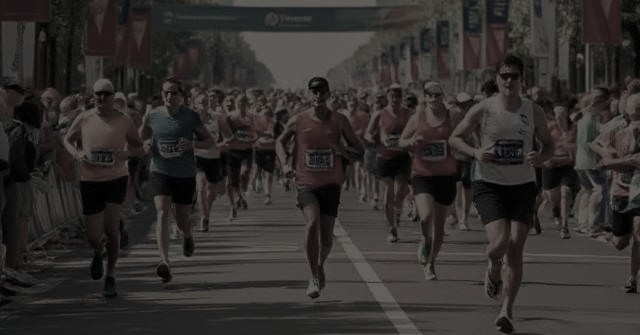
A marathon is a long-distance running race covering 42.195 kilometres (26.2 miles). Learn why that distance became standard, how a marathon differs from a half marathon, and what new runners should know about training, pacing, hydration and race day.
A marathon is one of the best-known endurance events in the world. It brings together elite athletes aiming for record times, experienced runners chasing personal bests, and first-time participants who simply want to cross the finish line. The distance is demanding, but the event is not reserved for professional athletes. With a sensible plan, patience and appropriate preparation, many recreational runners can work towards completing one.
The official marathon distance is 42.195 km, or approximately 26.2 miles. That number is the key fact to remember if you are comparing races, planning a training schedule or trying to understand a marathon result. The distance is fixed for standard road marathons, although course layouts, elevation, weather and race conditions differ from event to event.
This guide explains the distance in plain language, looks at the story behind it, compares common race categories and outlines the fundamentals of preparation. It is designed as a starting point, not a substitute for a personalised training plan or advice from a qualified health professional.
- Full marathon: 42.195 km (about 26.2 miles).
- Half marathon: 21.0975 km (about 13.1 miles).
- Training priority: build consistency and endurance gradually, rather than trying to run the full distance in one early workout.
- Race-day priority: start conservatively, follow a practiced hydration and fueling approach, and respond to your body.
1. What is a marathon?
A marathon is a long-distance running event over a standard course of 42.195 kilometres. It can be held on public roads, closed city streets or a measured course designed for the event. Some races are large international spectacles with elite fields and crowds; others are smaller community events where participants run for personal goals, charity, fitness or the shared experience of finishing.
Marathons test more than speed. Runners need aerobic endurance, pacing discipline, mental resilience and the ability to manage effort over several hours. The first part of a marathon can feel comfortable, but fatigue often increases later. This is one reason marathon preparation focuses on gradually extending time on your feet and learning to control effort rather than sprinting through early kilometres.
The word "marathon” is also sometimes used informally for a demanding or extended activity. In organised athletics, however, a full marathon refers to the recognised race distance. A "virtual marathon” usually means a participant completes the same target distance independently, within the event’s rules and submission window, rather than following a single mass-start course. Always check the specific event rules before registering.
2. Marathon distance in kilometres and miles
The marathon distance is 42.195 kilometres. In miles, this is approximately 26.2 miles. The exact conversion is about 26.2188 miles, which is why race descriptions commonly round it to 26.2.
| Measurement | Distance | Useful note |
|---|---|---|
| Metres | 42,195 m | The standard metric distance. |
| Kilometres | 42.195 km | Commonly used in India and many other countries. |
| Miles | About 26.2 mi | Commonly used in the United States and United Kingdom. |
| Half marathon | 21.0975 km / about 13.1 mi | Exactly half of the full marathon distance. |
During training, you may see a watch or running app display kilometres, miles, pace per kilometre or pace per mile. Make sure your plan and device use the same units. A pace of 6:00 per kilometre is not the same as 6:00 per mile; confusing the two can lead to a very different effort. If you are following a coach’s plan, check whether distances and pace targets are expressed in kilometres or miles.
Road courses are measured according to recognised course-measurement procedures, but your GPS watch may record a little more than the official distance. Small differences can happen because of satellite accuracy, buildings, tree cover, turns and the line you take through a course. For official results, use the race’s timing system rather than assuming your watch’s distance is the final authority.
3. Why is a marathon 42.195 km?
The marathon’s name is linked to the ancient Greek story associated with the plain of Marathon and the city of Athens. The traditional story tells of a messenger travelling to report news of a Greek victory. The details of the legend have been retold in different ways, so it is best understood as the historical inspiration for the modern race rather than a precise account of the present-day course.
The modern marathon became part of the first modern Olympic Games in Athens in 1896. Early marathon races did not all use today’s exact standard distance. Courses varied, and the distance became standardised over time. The 1908 Olympic marathon in London is especially associated with the 42.195 km length: the course was arranged to begin at Windsor Castle and finish in the Olympic Stadium, creating the distance that later became the recognised standard.
The standard distance was formally adopted by the international athletics governing body in the twentieth century. Today, the same distance links races across continents, even though the experience can be very different depending on weather, terrain, elevation and crowd support. A flat, cool city course may suit fast times, while a hilly route or hot conditions can make the same distance feel considerably harder.
The story is a reminder that the marathon combines tradition with modern sport. Its precise distance is now standard, but every participant brings a different reason for running it: competition, a personal milestone, community, fundraising or the challenge of completing something that once seemed out of reach.
4. Marathon vs half marathon, 10K and 5K
Running events are often grouped by distance. Shorter races can be useful stepping stones for new runners, while longer events require more endurance preparation and recovery. The right starting distance depends on your current activity, health, experience and goals - not on what other runners are doing.
| Race type | Distance | Who may consider it? |
|---|---|---|
| 5K | 5 km | New runners, walkers and people building a regular exercise habit. |
| 10K | 10 km | Runners who can comfortably cover shorter distances and want a new goal. |
| Half marathon | 21.0975 km | Runners ready for a longer endurance challenge and a structured build-up. |
| Full marathon | 42.195 km | Runners who have built a consistent base and can prepare over an appropriate period. |
| Ultramarathon | Longer than 42.195 km | Experienced endurance athletes who prepare for the demands of the specific event. |
A half marathon is not simply a full marathon that is half as difficult. It is shorter, but it still requires endurance and sensible preparation. Likewise, a runner who is comfortable with a 10K should not assume that doubling the distance will be straightforward. The marathon places a much greater demand on time-on-feet, energy management and recovery.
If you are new to running, consider beginning with regular easy sessions and a shorter event. A 5K can teach you how event registration, start corrals, timing and race-day routines work. A 10K or half marathon may become a later goal. The full marathon can wait until your training history and recovery habits support it.
5. How long does a marathon take?
There is no single finish time that defines a successful marathon. Elite athletes can finish in a little over two hours, while many recreational participants take several hours. Course cut-off times and event policies differ, so read the organiser’s information before entering.
Your expected finish time depends on current fitness, previous race results, training consistency, elevation, weather, fueling, pacing and how you feel on the day. A recent 5K, 10K or half-marathon result can help you form a rough estimate, but it cannot guarantee a marathon outcome. The final kilometres may feel very different from shorter races.
| Average pace | Approximate marathon time | Interpretation |
|---|---|---|
| 5:00 min/km | 3 hr 31 min | Requires strong endurance and consistent pacing. |
| 6:00 min/km | 4 hr 13 min | A common pace calculation example, not a recommended target for everyone. |
| 7:00 min/km | 4 hr 55 min | Shows how steady pace translates to total time. |
| 8:00 min/km | 5 hr 38 min | Check that the event’s cut-off accommodates your planned pace and breaks. |
These are mathematical estimates using a constant pace and do not include time lost at aid stations, congestion or toilet stops. Real pacing often changes throughout a race. For a first marathon, a realistic and controlled effort is usually more useful than chasing an ambitious time that is not supported by your training.
6. How should a beginner train for a marathon?
Marathon training is a gradual process. Many beginner plans use a multi-month build-up, but the right duration depends on your starting point, previous running, available training days and recovery. Someone who already runs regularly may need a different plan from someone who is starting from little or no running. Do not treat a calendar template as a guarantee that your body is ready.
Build a consistent base first
Start by establishing a routine you can repeat without excessive fatigue. Easy runs should generally feel controlled enough that you can speak in short sentences. If continuous running is not comfortable yet, a run-walk approach can help you develop consistency. Walking is a legitimate part of building endurance, and many runners use planned walk breaks during longer events.
Increase distance gradually
Long runs help your body and mind adapt to spending more time moving. Increase training load cautiously and avoid adding distance, speed and extra sessions all at once. There is no universal weekly percentage that guarantees injury prevention. Pay attention to persistent pain, unusual fatigue, disrupted sleep or a decline in performance; these can be signs that you need more recovery or professional advice.
Balance running with recovery
A sensible plan usually combines easy running, a longer run, rest or recovery days and - when appropriate - some strength work. Strength exercises for the hips, calves, hamstrings, glutes and trunk can support general running capacity. They should complement your running rather than leave you too sore to complete the key sessions. Sleep, adequate food and rest are part of training, not optional extras.
Practice the conditions you will face
Use some longer sessions to test shoes, socks, clothing, hydration access and the foods or sports products you may use on race day. Do not wait until the marathon to discover that a new shoe rubs, a belt bounces or a drink upsets your stomach. If you plan to run in hot or humid conditions, adapt carefully and seek qualified guidance if you are unsure how to do so safely.
Use a plan that matches your current level
Training plans vary in weekly frequency, intensity and long-run progression. Choose one that fits your experience and schedule, and be willing to adjust it when illness, injury, work or family responsibilities intervene. Avoid trying to "make up” every missed session by stacking hard workouts together. If you have a chronic condition, a history of significant injury or concerns about exercising, discuss your plans with an appropriate healthcare professional.
For a more structured next step, read the guide to crafting a training plan. Use it to think through weekly availability, current ability, progression and recovery before selecting a marathon-specific schedule.
7. Pacing and race-day strategy
Pacing means managing how quickly you cover the course. A common beginner error is starting too fast because the crowd, music and excitement make the opening kilometres feel easy. That early effort can become costly later. A conservative start gives you a better chance of keeping effort under control as fatigue builds.
Decide on a realistic effort before the event, using your training and recent results. A pace chart can help convert a target time into minutes per kilometre, but it should be a guide rather than a command. Heat, humidity, wind, hills and crowded sections may require you to slow down. If you feel unwell, dizzy, confused, unusually breathless or experience chest pain, stop and seek medical assistance rather than trying to preserve a target time.
Some runners aim for an even pace, while others use a strategy that starts gently and increases effort only if they feel strong later. Either approach is less useful if the target is unrealistic for your training. Walk breaks can be planned from the beginning rather than used only after exhaustion sets in. If you use a GPS watch, remember that instant pace can fluctuate; average pace over a measured segment may be easier to interpret.
At aid stations, move predictably and follow the event’s instructions. Avoid sudden stops in crowded areas. Do not weave aggressively through other runners to save a few seconds; the energy cost and risk of collision are rarely worth it. Respect course marshals and follow the route markers, especially where the course turns or splits.
8. Marathon nutrition and hydration
Food and fluid planning matter because a marathon can last long enough for energy stores to become a limiting factor. Your needs depend on body size, pace, weather, sweat rate, medical circumstances and what your stomach tolerates. This is why it is important to practise your approach during training instead of copying another runner’s routine.
Before the race
In the days before a marathon, many runners focus on familiar carbohydrate-rich meals and avoid experimenting with unusual foods. The exact approach should fit your health needs and normal diet. On race morning, choose a meal or snack you have already tested in training and allow enough time to digest it. A marathon is not the right day to trial a new supplement or a very heavy breakfast.
During the race
For long endurance activity, some runners use sports drinks, gels or other easy-to-carry carbohydrate sources. The amount and timing vary, and products should be tested beforehand. Read labels and consider caffeine, ingredients and gastrointestinal tolerance. Water is important, but drinking excessively can also be dangerous; do not force large amounts of fluid simply because you are running a long distance. Use a plan appropriate to the conditions and your needs.
After the finish
After finishing, take time to cool down, drink according to thirst and eat a meal or snack that provides carbohydrates, protein and other nutrients. Recovery is not completed at the finish line. A gradual return to training, adequate sleep and attention to persistent pain or illness help you recover. If you experience severe symptoms, confusion, collapse or other urgent concerns, seek immediate medical help.
Nutrition advice online can be too general to fit everyone. People with diabetes, kidney or heart conditions, gastrointestinal disorders, food allergies or other relevant health considerations should get individual advice from a qualified healthcare professional or sports dietitian.
9. What to do before and during marathon race day
A good race-day routine reduces avoidable stress. Read the organiser’s instructions in advance and make a checklist rather than relying on memory when you are tired or excited.
- Check logistics: confirm start time, venue, transport, parking, bag-drop rules, identification requirements and the cut-off time.
- Prepare your kit: lay out tested shoes, socks, clothing, timing bib, safety pins or bib belt, and any permitted nutrition items.
- Allow extra time: arrive early enough for security, toilets, warm-up and moving to the correct start area.
- Follow event instructions: listen to marshals, respect road closures and use designated aid stations.
- Keep your plan flexible: adjust effort for heat, rain, wind, hills or how you feel that morning.
- Plan recovery: arrange transport home, dry clothing, food and a comfortable way to rest after finishing.
For a virtual marathon or virtual running challenge, the logistics are different. Check the allowed activity types, target distance, completion window, evidence requirements and submission deadline. Some events permit distance to be completed in one session; others may allow a cumulative total over several days. Never assume the rules are identical across organisers. Keep your activity record and submit it in the format requested by the event.
Make your next running goal count
Prefer to build consistency through a defined challenge before aiming for a full marathon? Explore RunXpert’s virtual running options and choose an event that matches your current distance and schedule.
Explore virtual runs10. Common marathon mistakes beginners should avoid
Doing too much too soon
Enthusiasm can lead to a sudden jump in weekly distance or intensity. Fitness develops over time, and bones, tendons and muscles also need time to adapt. Follow a manageable progression and take recurring pain seriously rather than treating every warning sign as something to push through.
Copying someone else’s training plan
A plan that suits a runner with years of experience may not suit a beginner. Consider your recent running history, available time, recovery and any relevant health concerns. The best plan is one you can follow consistently and adapt responsibly - not necessarily the most demanding one.
Testing new gear or food on race day
New shoes, unfamiliar socks, a different breakfast or an untested energy gel can cause discomfort at exactly the wrong time. Use training sessions to test what you intend to wear and consume. If something repeatedly causes problems, change the plan before race day.
Chasing pace from the first kilometre
Adrenaline can make an ambitious pace feel easy at the start. Use a realistic target and let effort guide you when conditions change. A controlled beginning is usually preferable to spending the final kilometres trying to recover from an overly fast start.
Ignoring rest and recovery
More training is not always better. Recovery allows the body to adapt, and persistent fatigue may mean the plan needs adjustment. Rest days are not wasted days; they are part of a sustainable training routine.
11. Why do people run marathons?
People take on the marathon for many reasons. Some want to compete or improve a personal best. Others raise money for a cause, mark a personal milestone, support friends, explore a city or prove to themselves that they can complete a difficult long-term goal. For many, the months of preparation are as meaningful as the finish itself.
Training can encourage a more regular exercise routine and provide a clear structure for setting goals. Running with a club, training partner or community can also create accountability and social connection. These benefits are not automatic, and marathon running is not the only way to become fit. Shorter races, walking, cycling, strength training and other activities can also support health and wellbeing.
It is worth separating personal achievement from pressure. You do not need to run a marathon to be a "real” runner. A comfortable 5K, a first kilometre without stopping, a consistent weekly routine or returning after a break can all be meaningful goals. Choose a distance that supports your life rather than allowing a race target to become a source of unnecessary stress.
If you do choose a marathon, celebrate the preparation as well as the result. Keeping a training log, noting how you felt after sessions and reviewing what worked can help you learn for the next event. Digital activity records and event communities may make it easier to track progress, but they should support your experience - not replace listening to your body.
12. Frequently asked questions about marathons
What is the exact distance of a marathon?
A standard marathon is 42.195 kilometres, equal to approximately 26.2 miles. GPS watches may record a slightly different distance from the official measured course.
How many kilometres is a marathon?
A marathon is 42.195 km. It is often rounded to 42.2 km in everyday conversation, but 42.195 km is the standard distance.
How many miles is a marathon?
A marathon is approximately 26.2 miles. The more precise conversion is about 26.2188 miles.
How far is a half marathon?
A half marathon is 21.0975 kilometres, or about 13.1 miles - exactly half the standard marathon distance.
Can a beginner run a marathon?
A beginner may be able to work towards a marathon, but it generally requires a gradual build-up, consistent preparation and enough recovery time. Someone starting from little or no running may benefit from beginning with shorter distances first. Individual readiness varies.
How many months does it take to train for a marathon?
There is no single duration that fits everyone. Many plans use a multi-month preparation period, and the appropriate length depends on your starting fitness, previous running, weekly availability and health. Choose a plan that matches your current level rather than selecting one solely by its number of weeks.
What is a good marathon finish time?
A good finish time is personal. It depends on your goals, training and circumstances. For a first marathon, completing the distance safely and within the event rules may be a more useful goal than comparing your time with elite athletes or other runners.
Is a marathon harder than a half marathon?
The full marathon is twice the distance of a half marathon and generally places greater demands on endurance, fueling and recovery. The difficulty you experience depends on preparation, pace, course and conditions.
Can I complete a marathon virtually?
Some organisers offer virtual marathon events where participants complete the target distance independently and submit activity evidence. Rules differ, so confirm whether distance must be completed in one session or may be accumulated over a defined period.
Do I need a GPS watch to train for a marathon?
No. A GPS watch can help track distance and pace, but it is not essential. You can use measured routes, a running app or a time-based plan. Whatever tool you use, remember that GPS measurements can vary and should not override how you feel.
Should I run every day while training?
Not necessarily. Training frequency should match your experience and recovery capacity. Many runners include rest or low-impact days. If you are unsure how often to run, choose a suitable beginner plan or consult a qualified coach or healthcare professional.
Final thoughts: start with the right distance for you
A marathon covers 42.195 kilometres (26.2 miles), but the number is only one part of the challenge. Understanding the distance, building a consistent routine, increasing training gradually, practising race-day habits and allowing time to recover all contribute to a more prepared experience. There is no need to rush the process or compare your journey with someone else’s.
If you are new to running, begin with a realistic goal and build from there. If you already run regularly, use your experience to choose a structured next step. Explore the resources below, review event rules carefully and make your next running goal one you can pursue safely and consistently.
Editorial note: This article provides general educational information. It is not medical advice or an individualised training prescription. Consult an appropriate professional if you have health concerns, persistent pain or uncertainty about starting endurance exercise.